Helping science,
be seen.
A catalog of work with academic research groups and labs — genetics, neuroscience, and biomedical engineering.
Pixelcrane has worked with the University of Utah's health-sciences community since the early 2010s — building websites, infographics, annual reports, and identity systems.
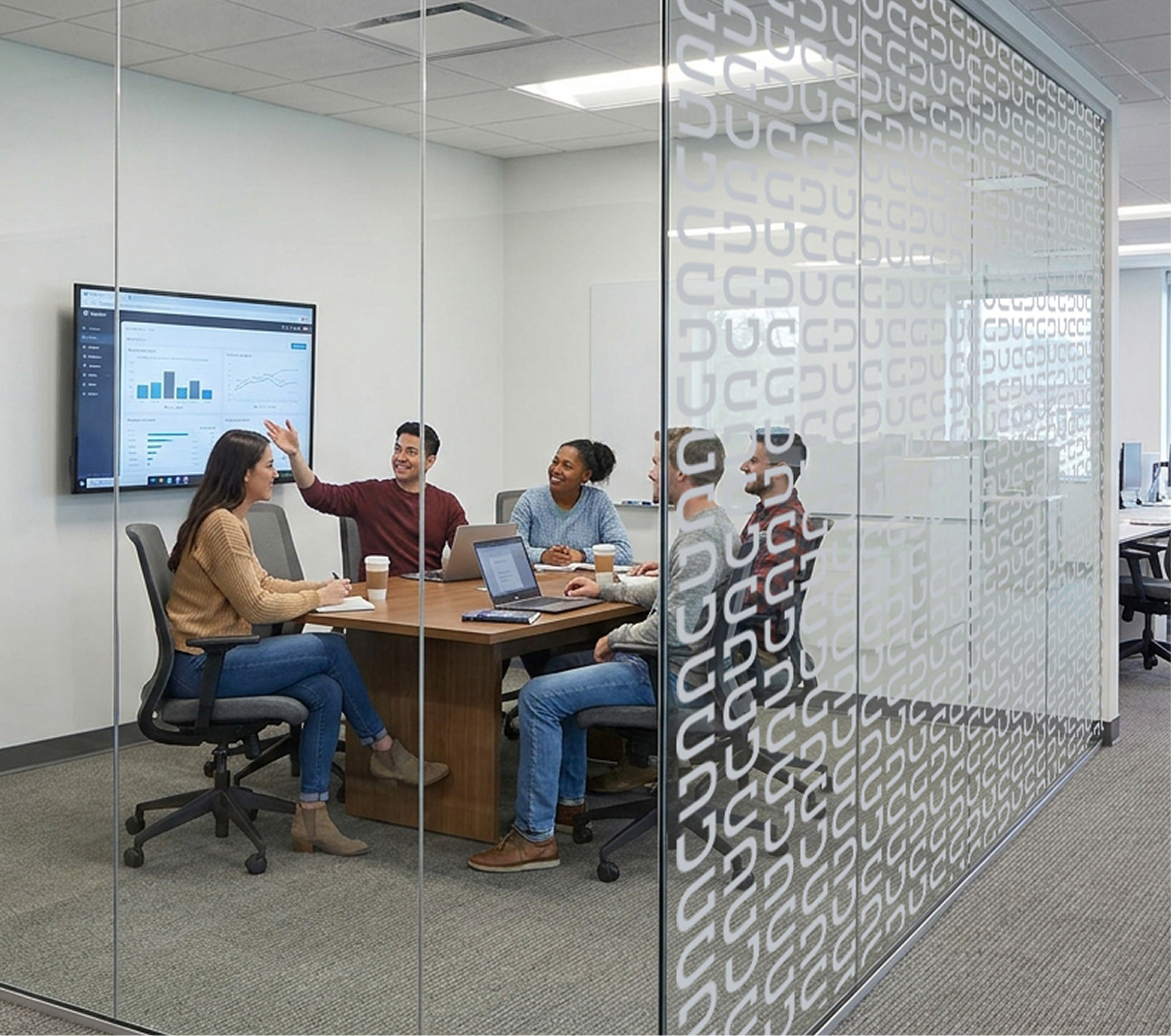
The mark and wordmark for the center. Designed to read at the small sizes it lives in most often — corner of a poster, footer of a publication, app icon — while still holding up in large institutional treatments.



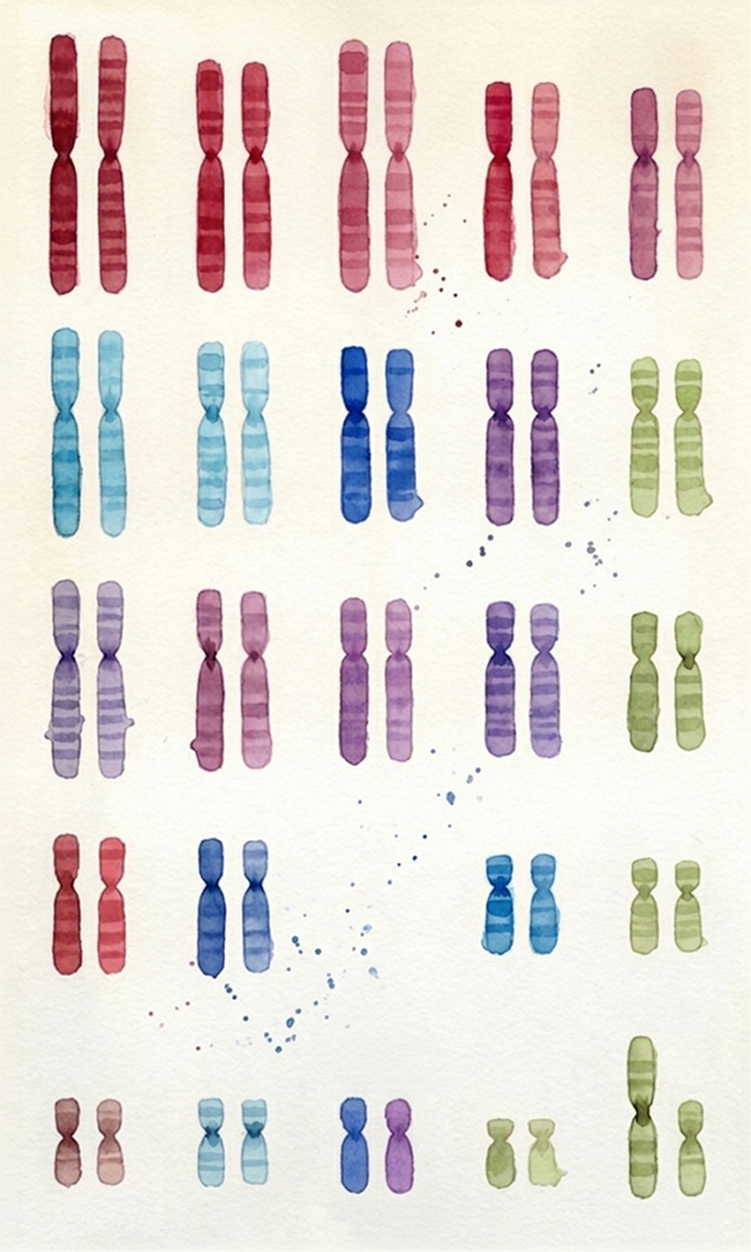
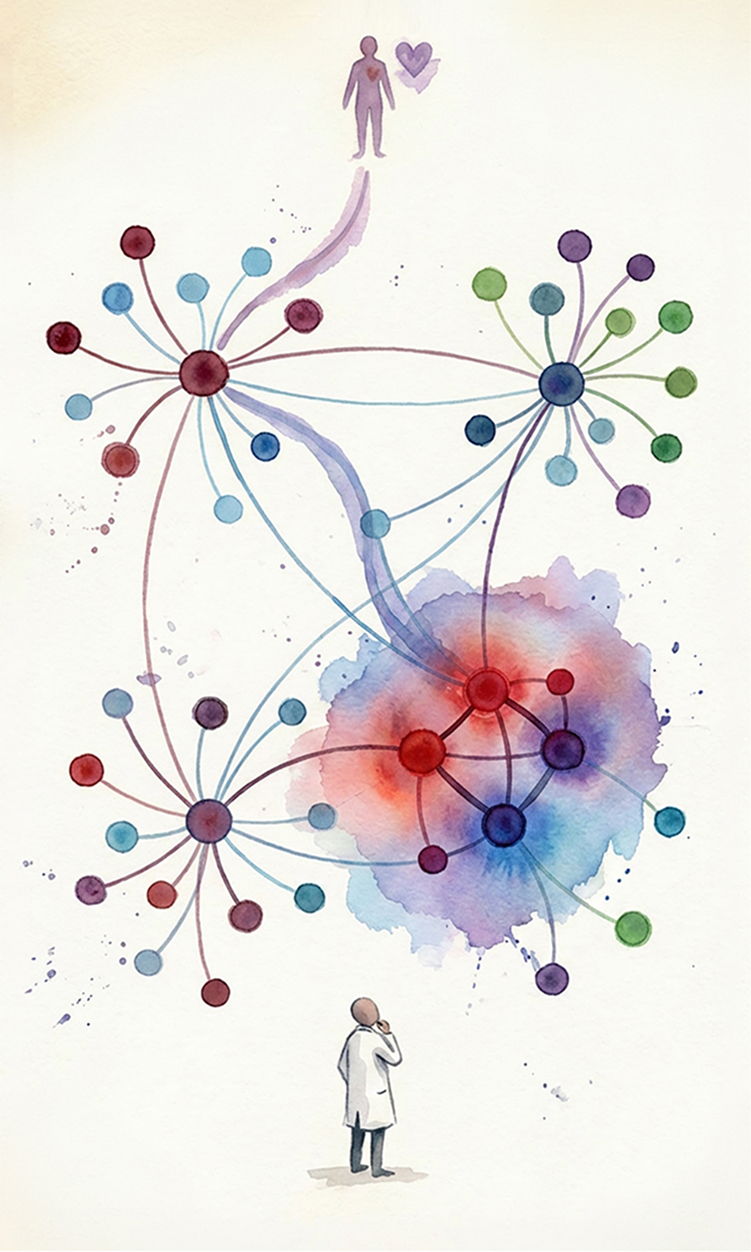
Generated illustrations used across the UCGD site and supporting materials. Custom prompts and post-treatment keep the palette and texture consistent across the set.

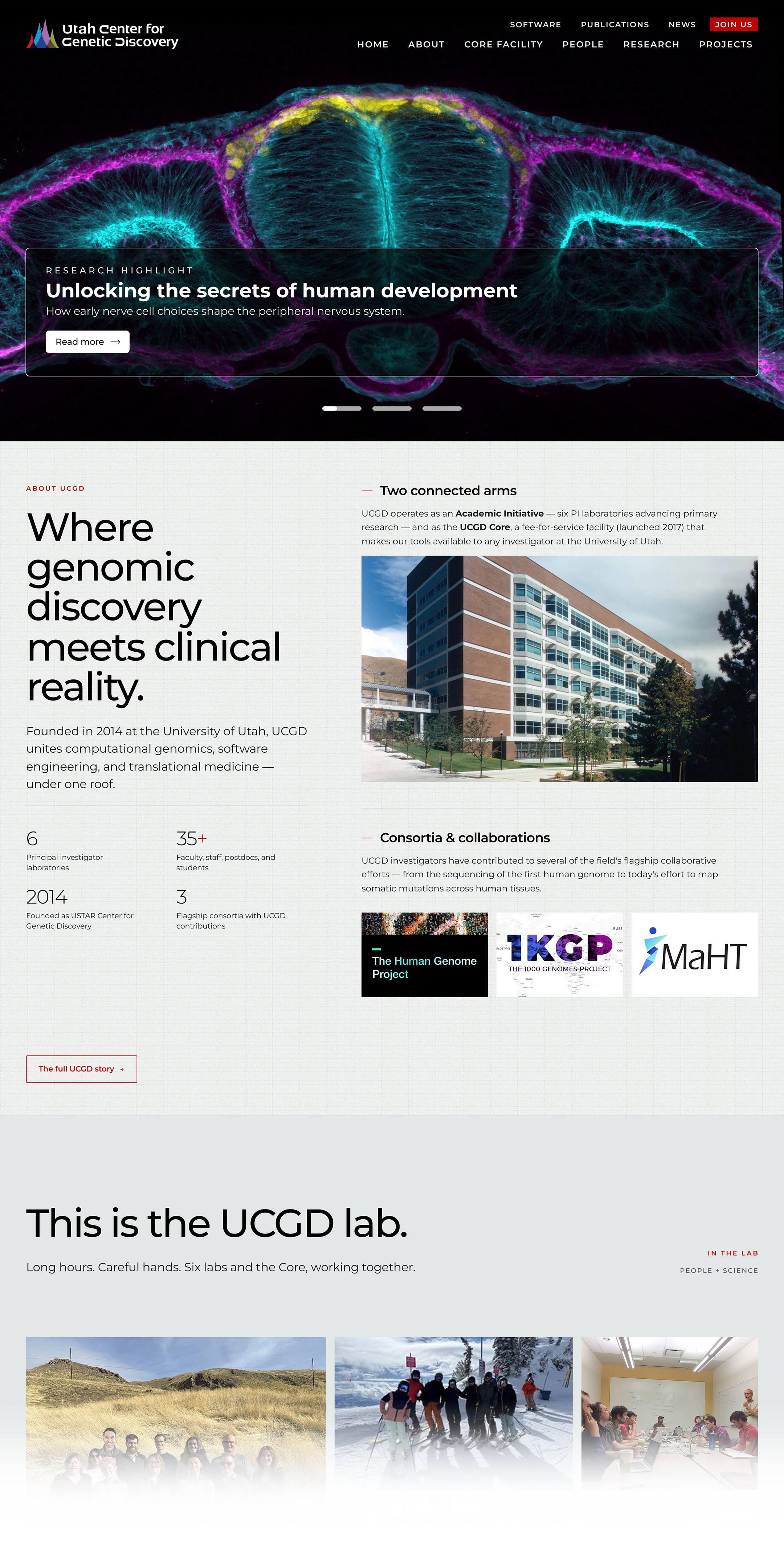
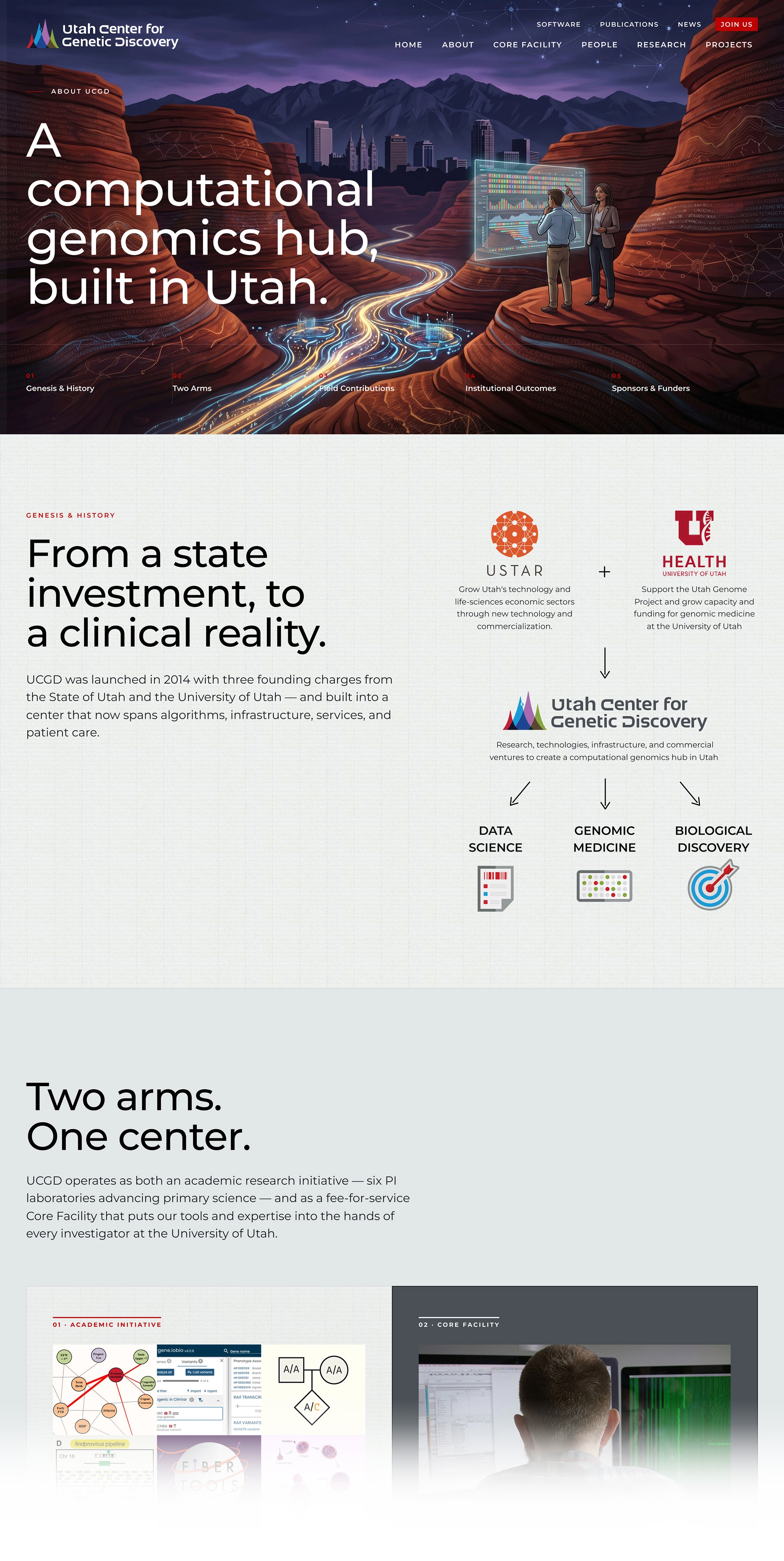
This project is in progress. The public face of the center. A full marketing site covering research focus areas (genomic medicine, genome biology), team, software, and a regularly updated news and publications stream. The structure had to hold up under heavy content while still reading as a confident, design-forward institution.
An iconography kit and the visual language used inside the patient-to-gene pipeline diagram. Tight grid, recognizable at small sizes, color discipline that holds across both light and dark backgrounds.









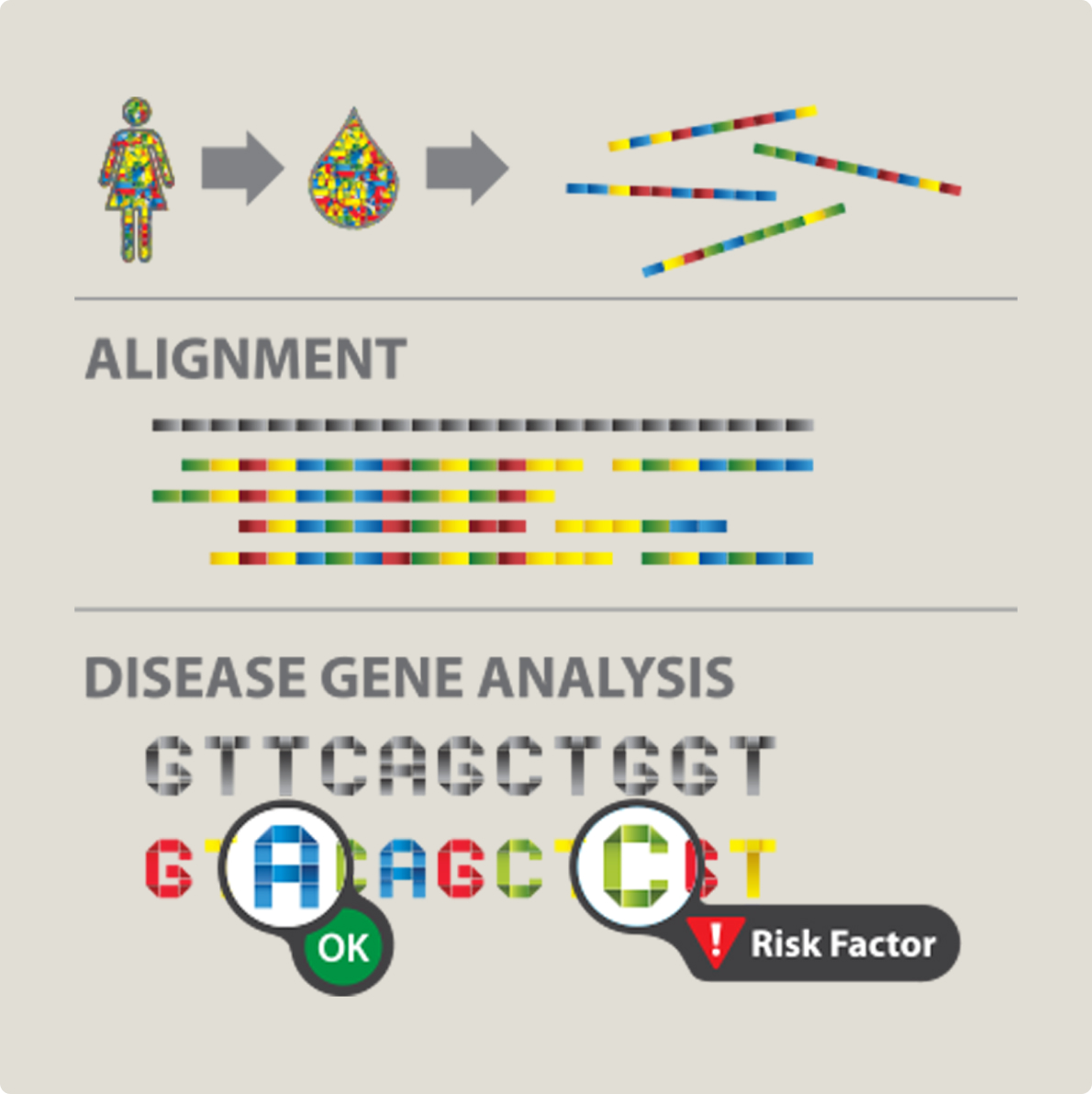
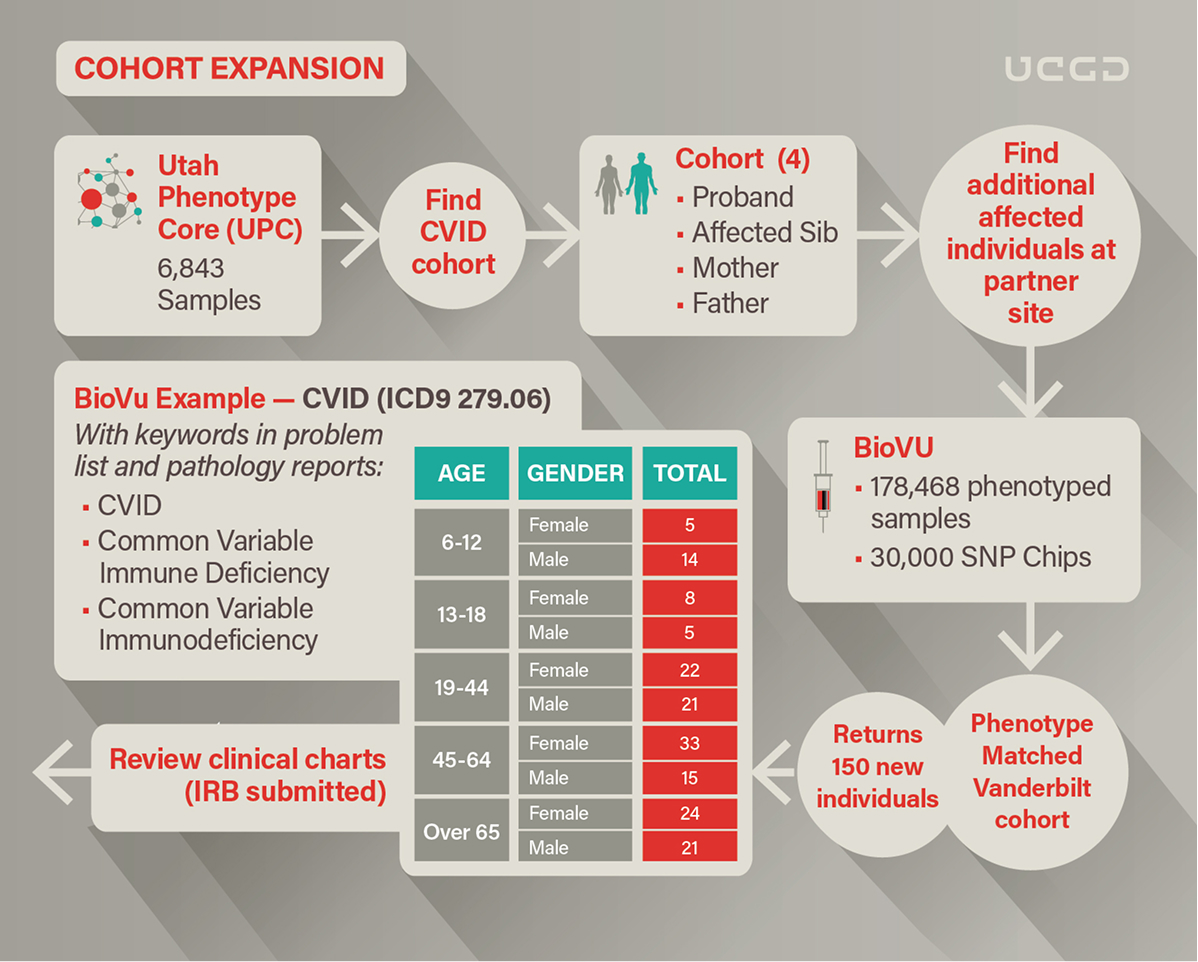
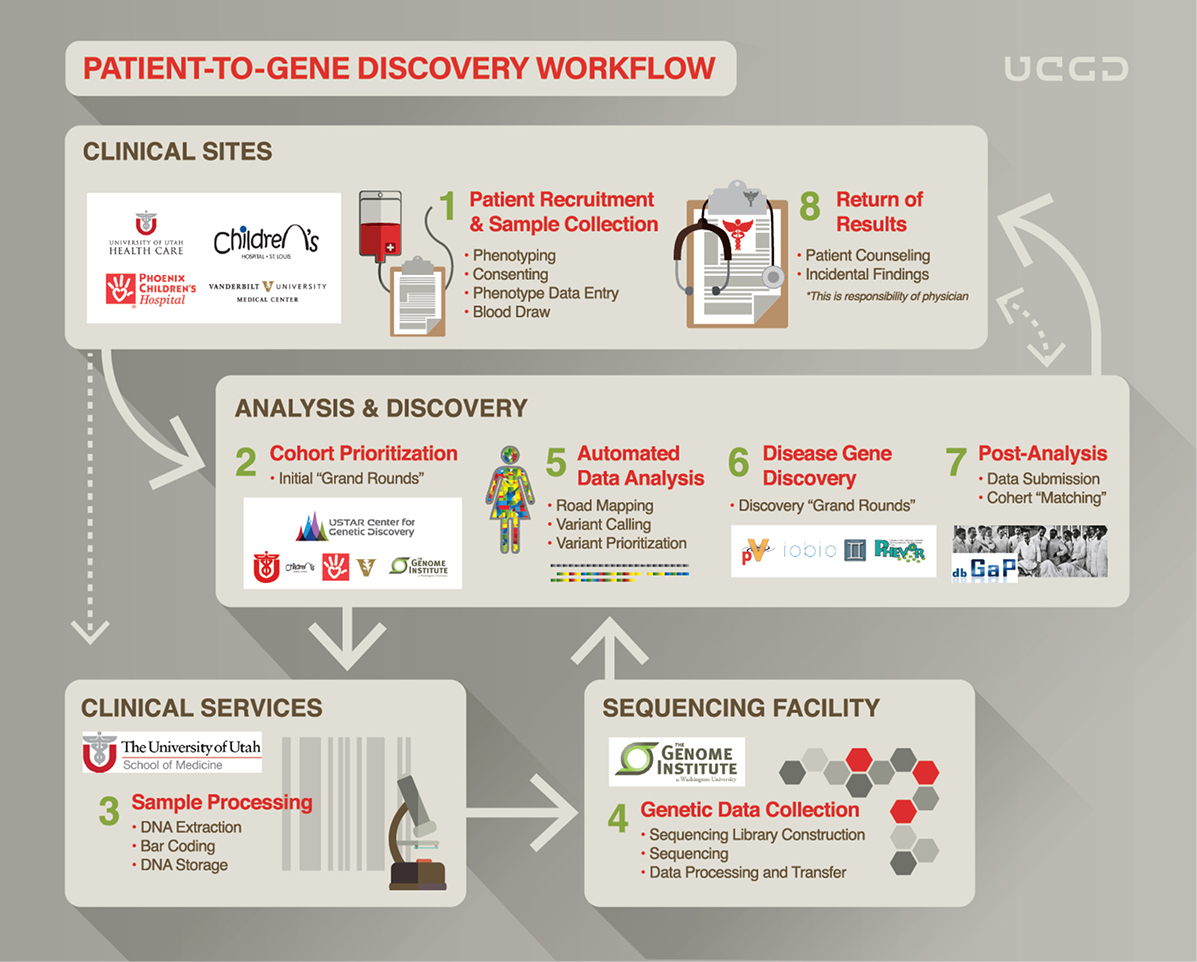
A pair of large-format infographics that explain how the center finds patients with a given rare disease, then walks them from clinic visit through sequencing, analysis, and result. Each panel is meant to function on its own at conference scale or printed in a grant submission.
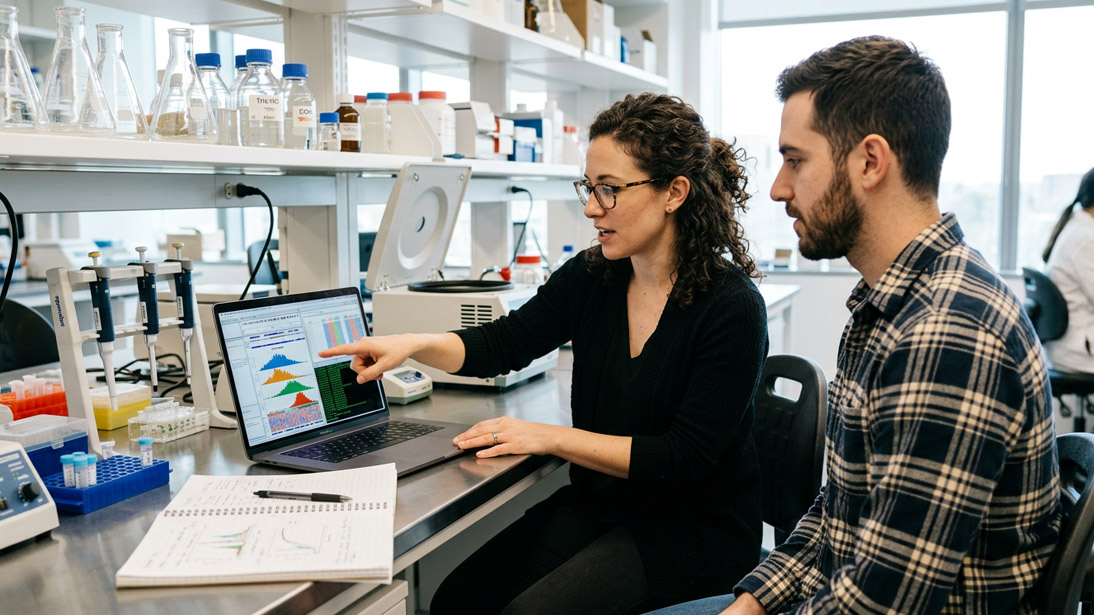
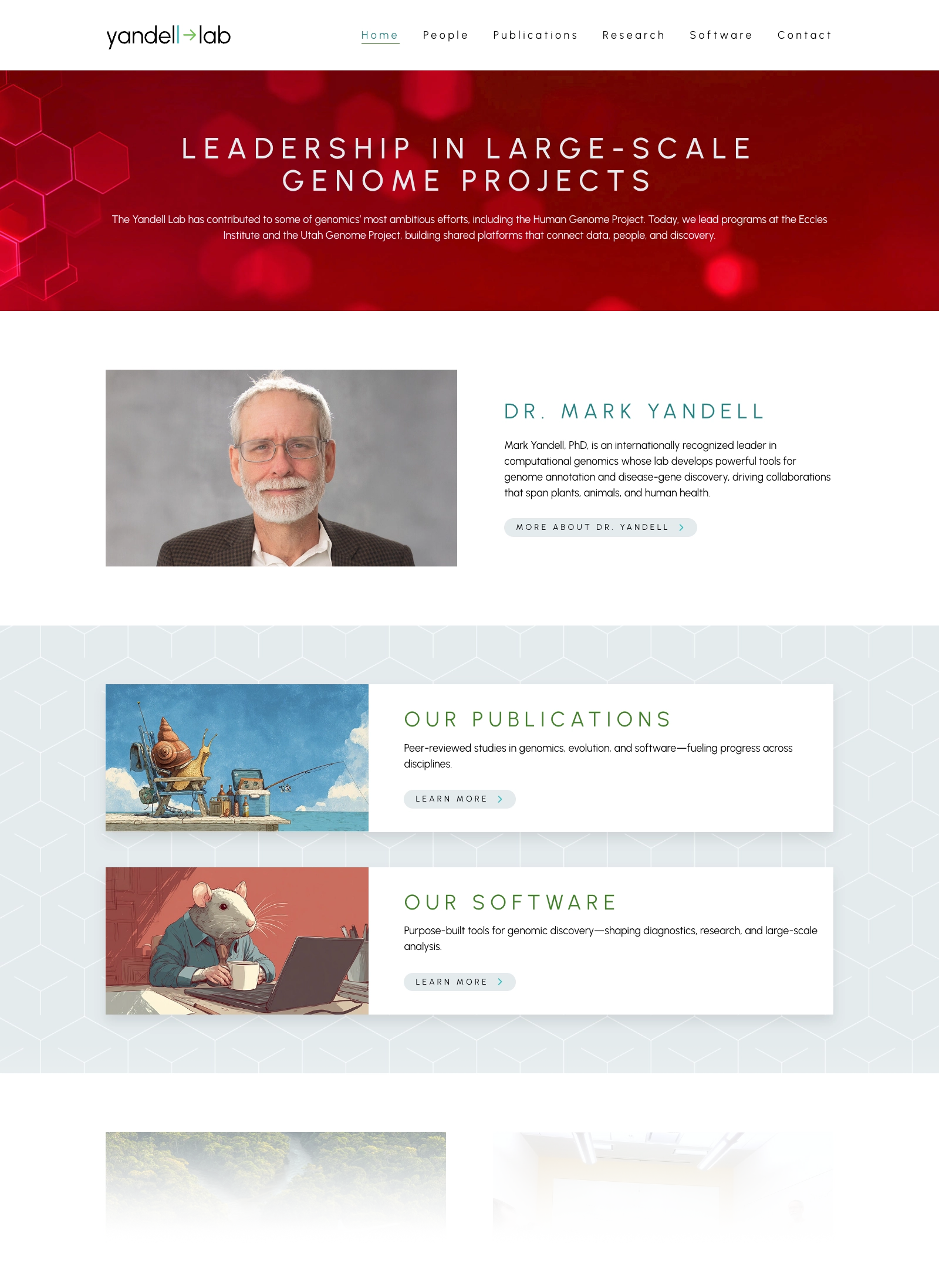
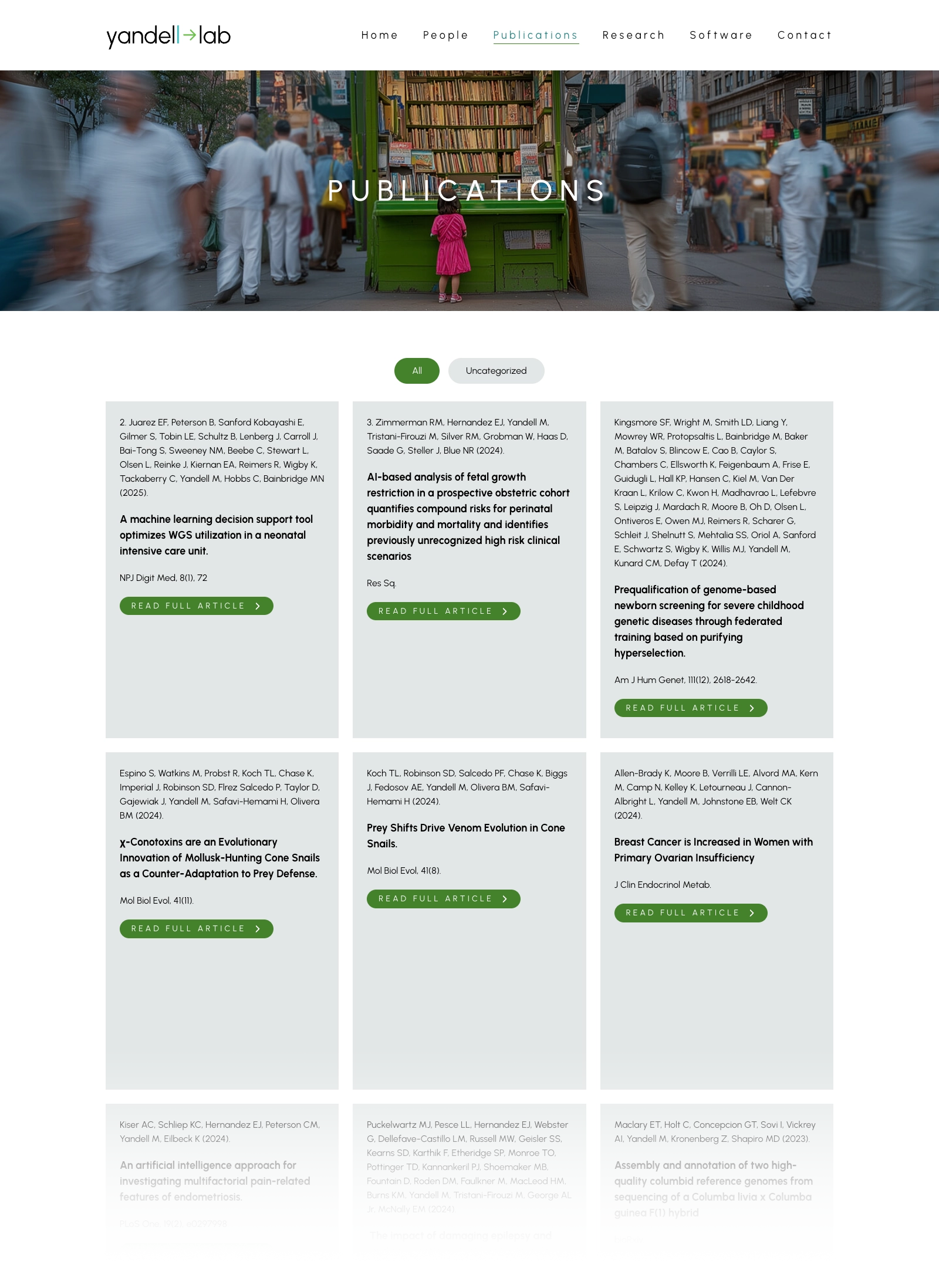
A research-group website for a lab at the intersection of computational genomics, evolution, and disease. Different audience than UCGD — this one talks primarily to peers, prospective postdocs, and collaborators, so the load-bearing sections are People, Publications, and Software. The design gets out of the way and lets the work lead.
- Scope
- Website redesign · CMS · Visual system
- Primary audience
- Peer researchers · Postdocs · Collaborators
- Signature sections
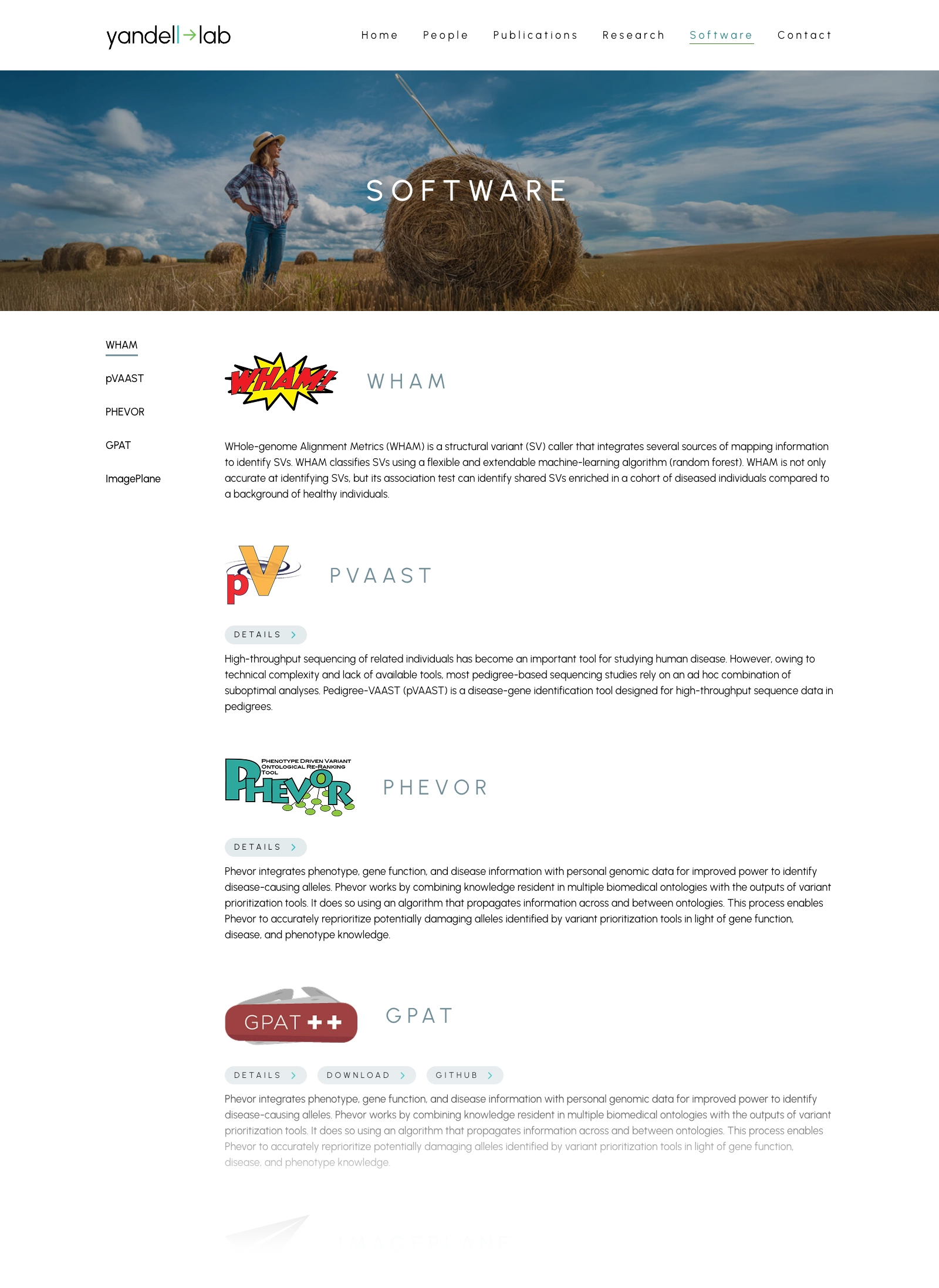
- Publications feed · Software directory (WHAM, pVAAST, PHEVOR, GPAT, ImagePlane)
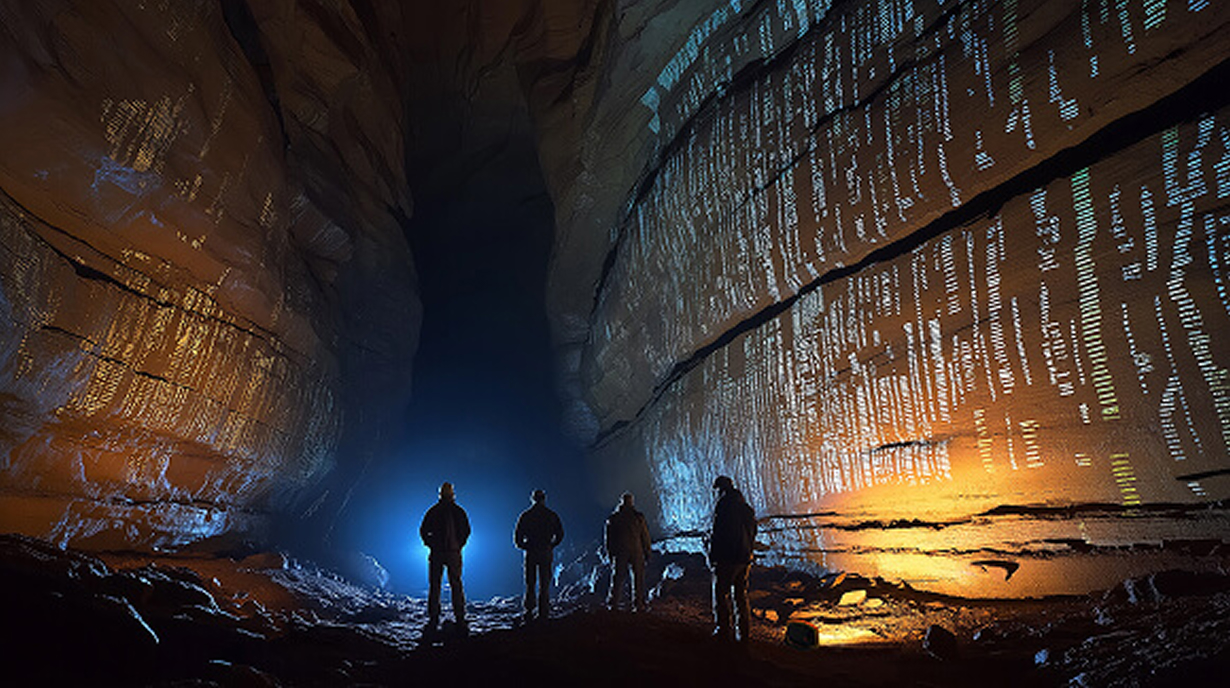
A small library of generated images used as section headers and supporting visuals across the site. Each piece is captioned with its prompt category so the source remains transparent.



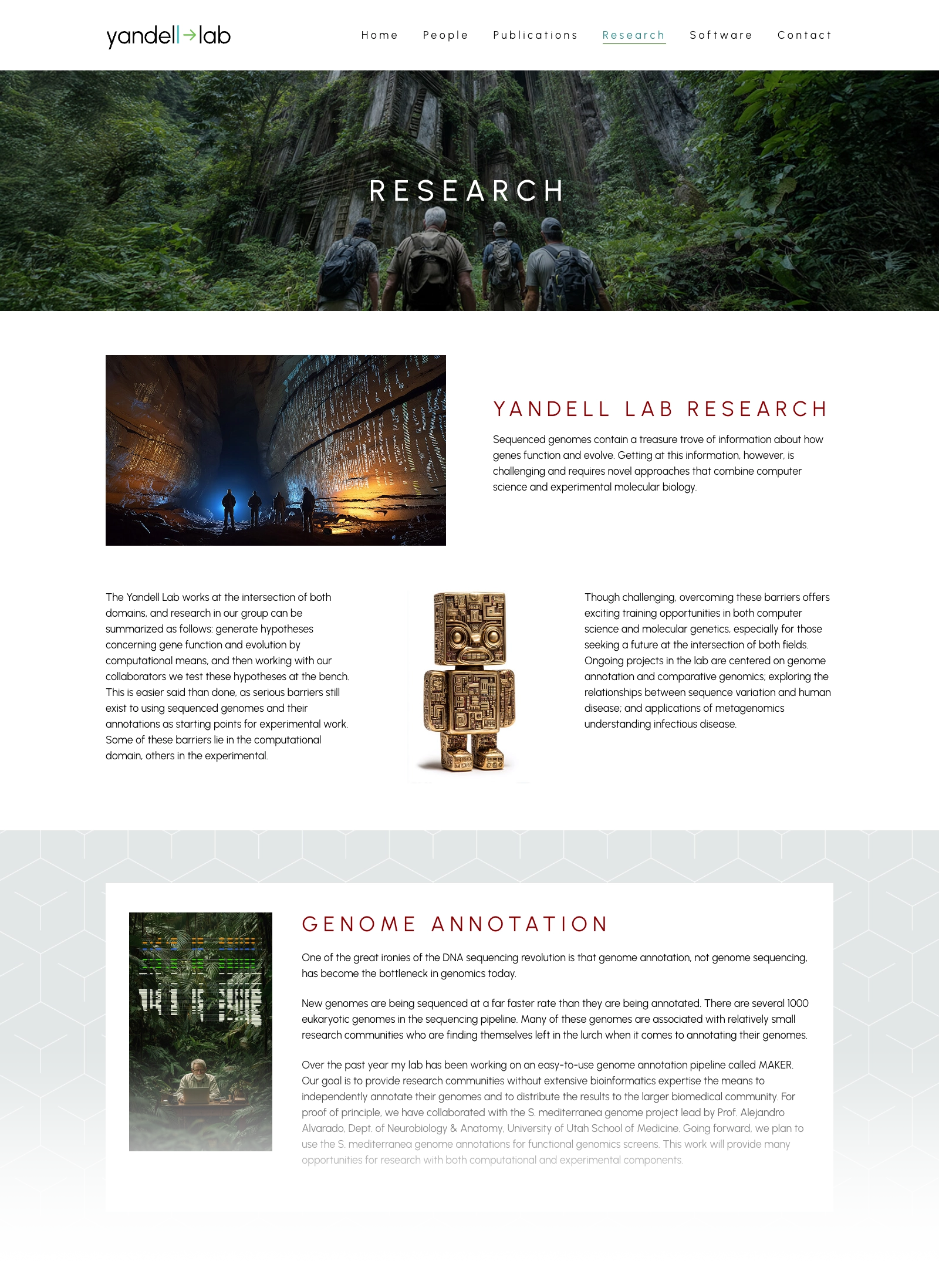
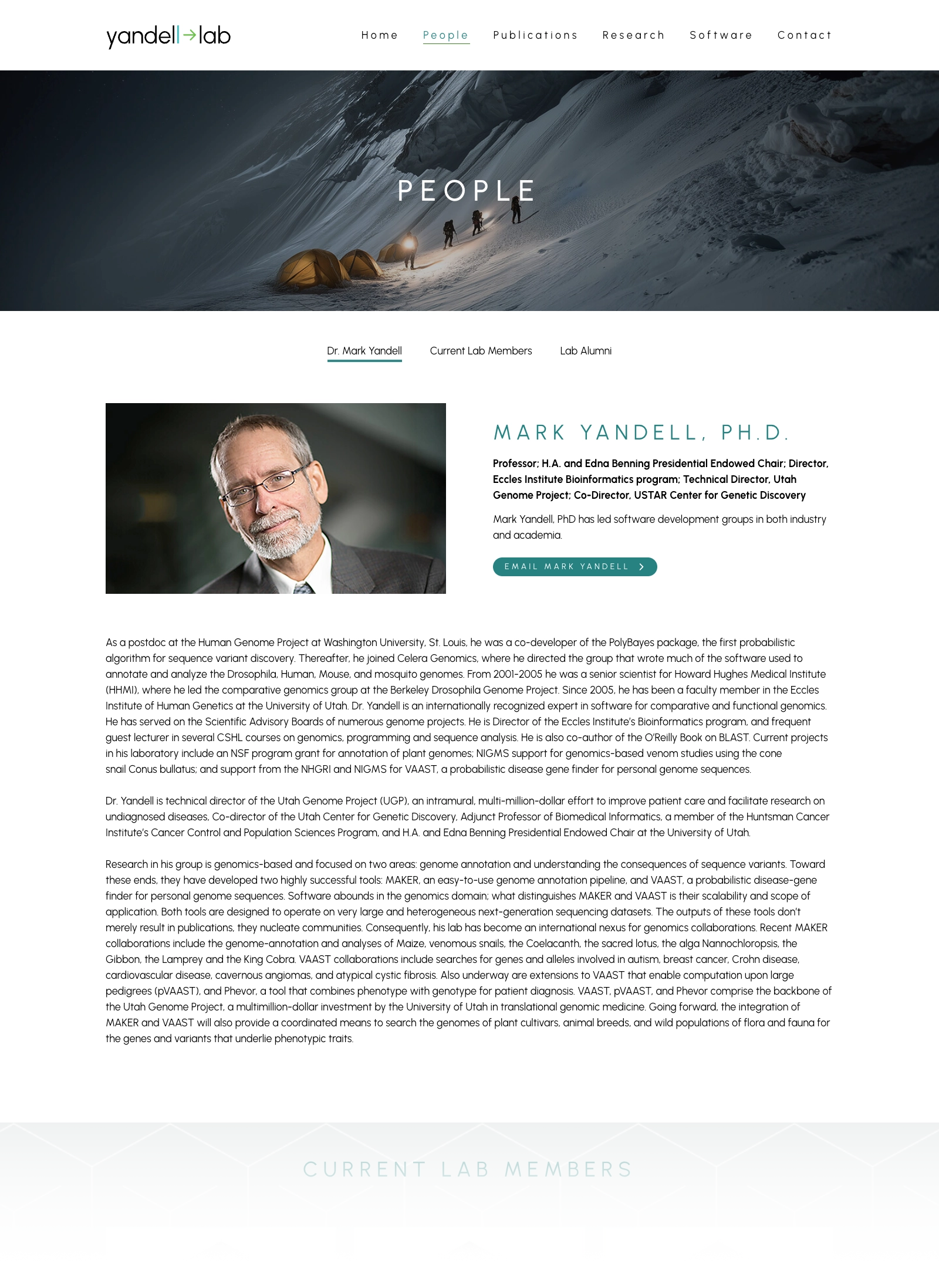
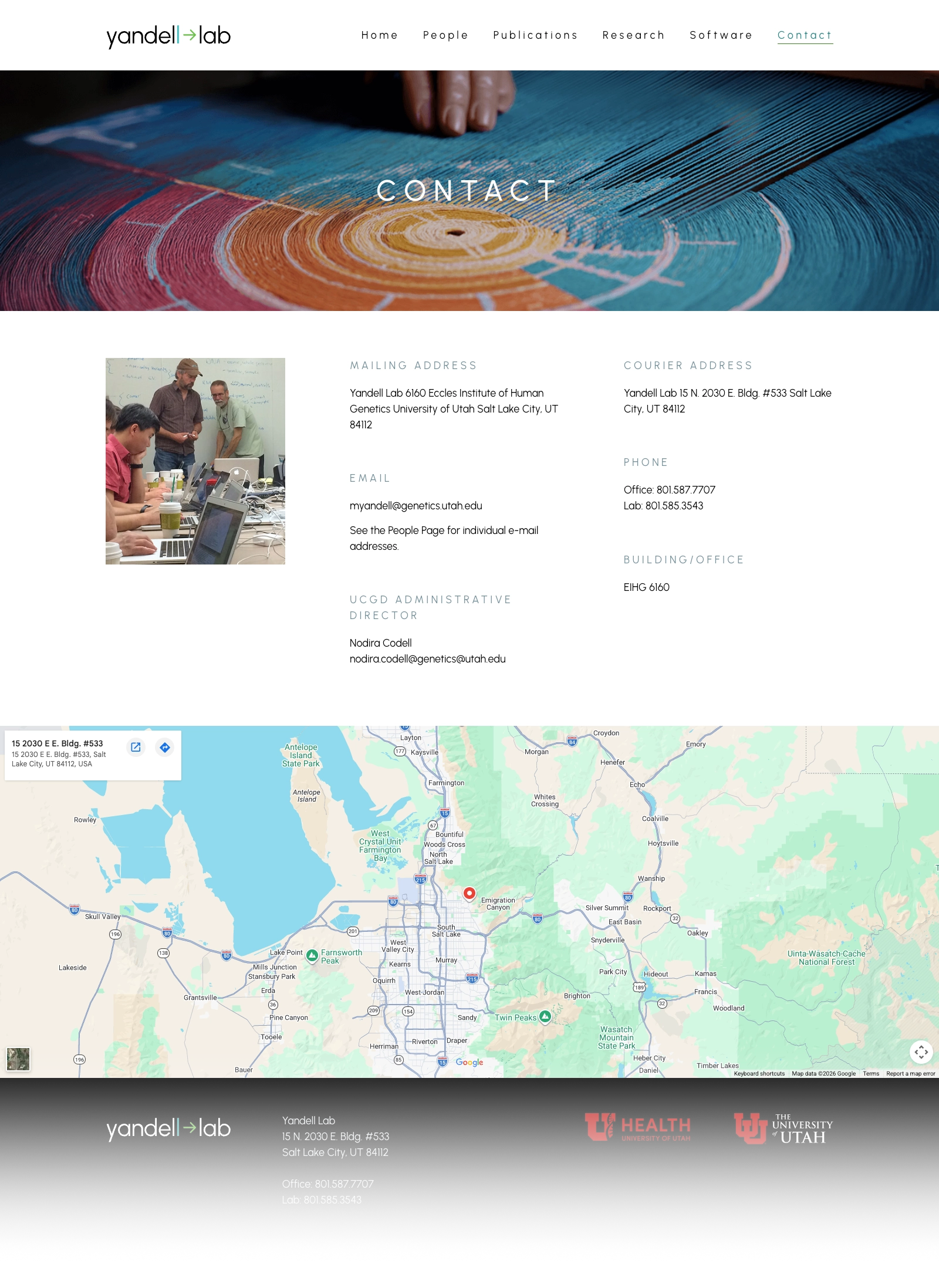
Six representative pages from the site — Home, People, Publications, Research, Software, Contact. The visual identity stays quiet so the content can carry the weight.
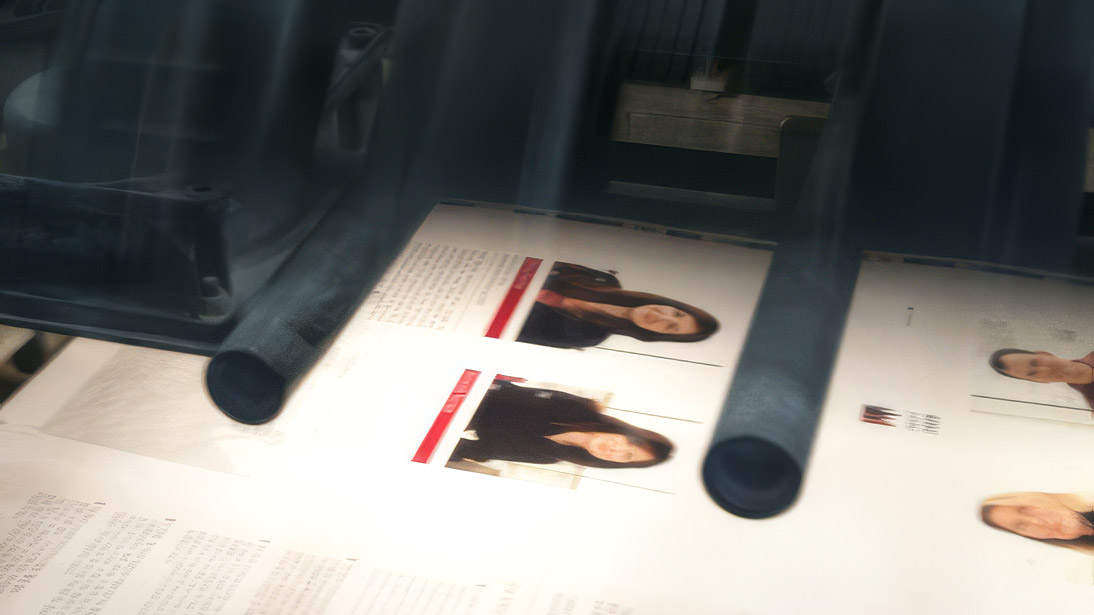
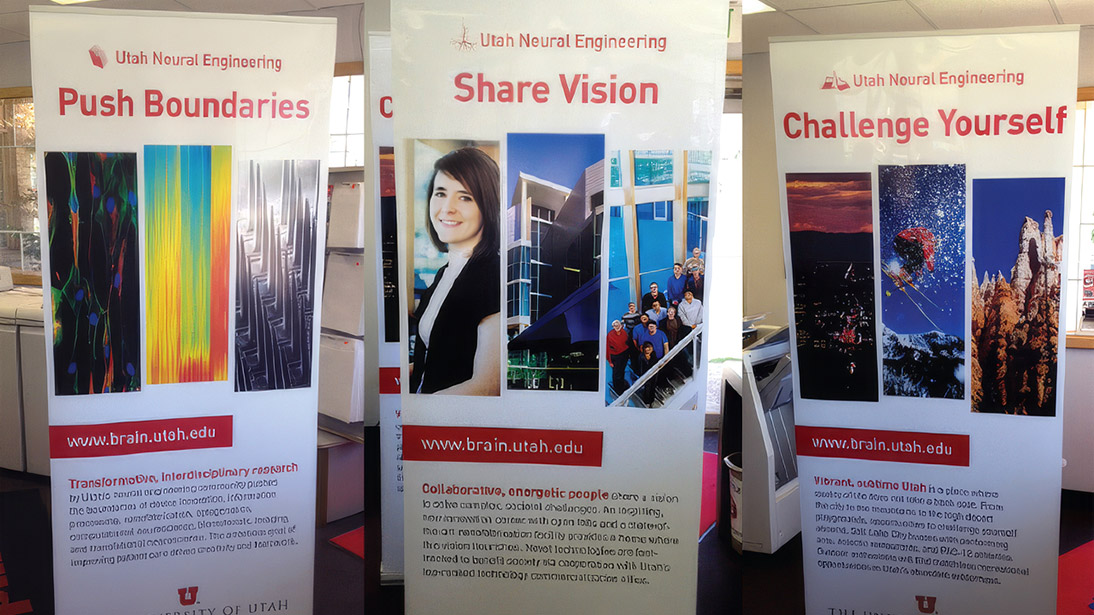
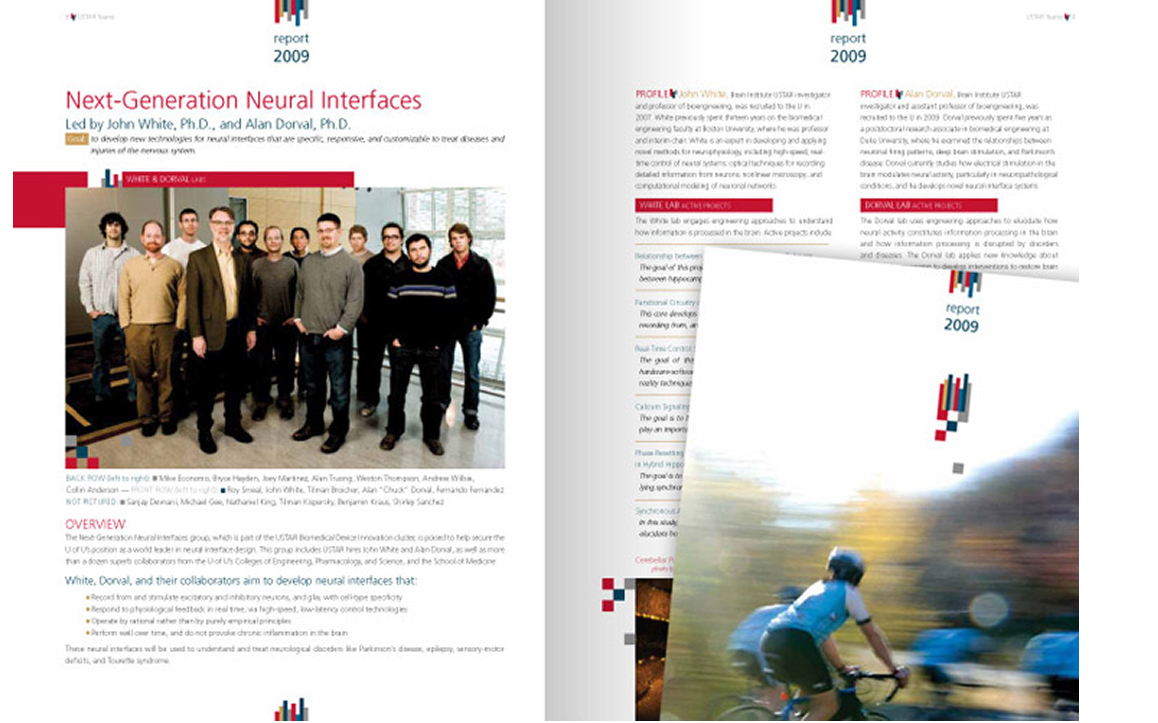
Print and identity for a neuroscience research institute at the University of Utah. Three deliverables — annual report, logo, and small-run collateral — that share a visual system while serving very different audiences: funders, peers, and the next generation of researchers.
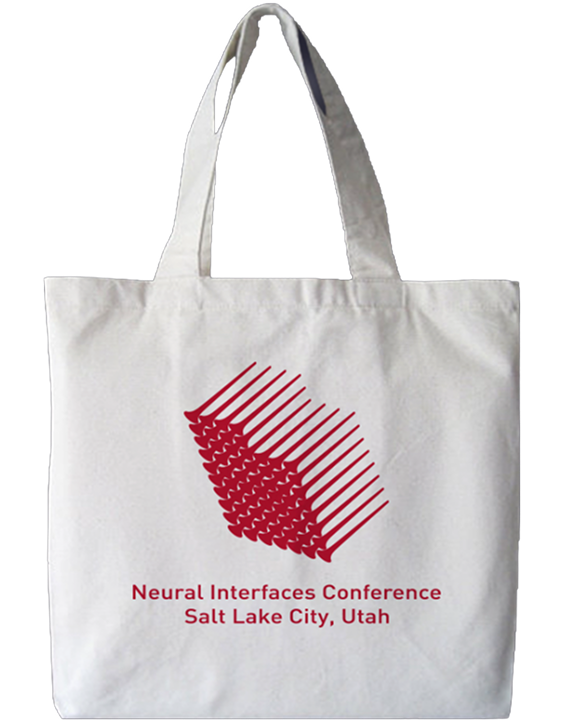
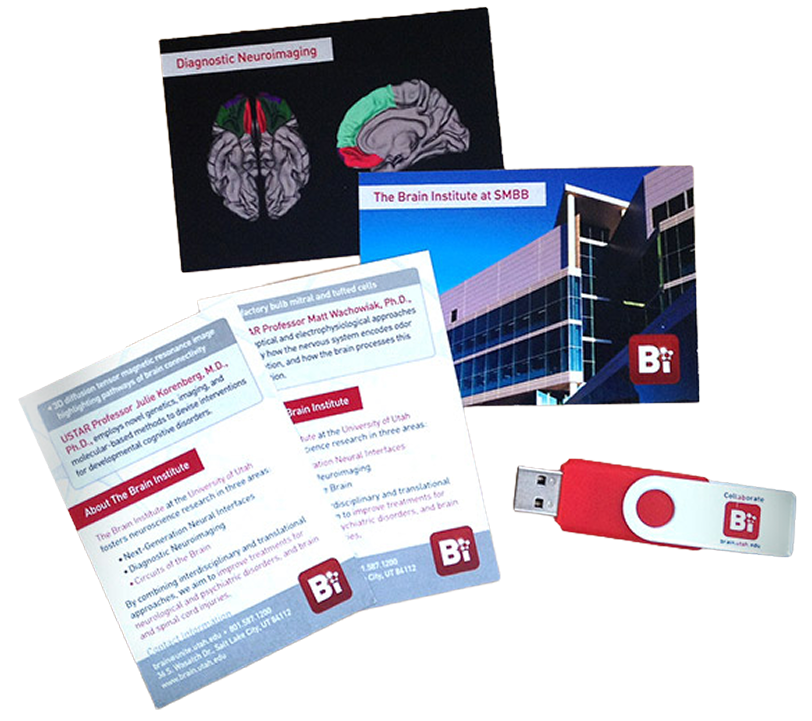
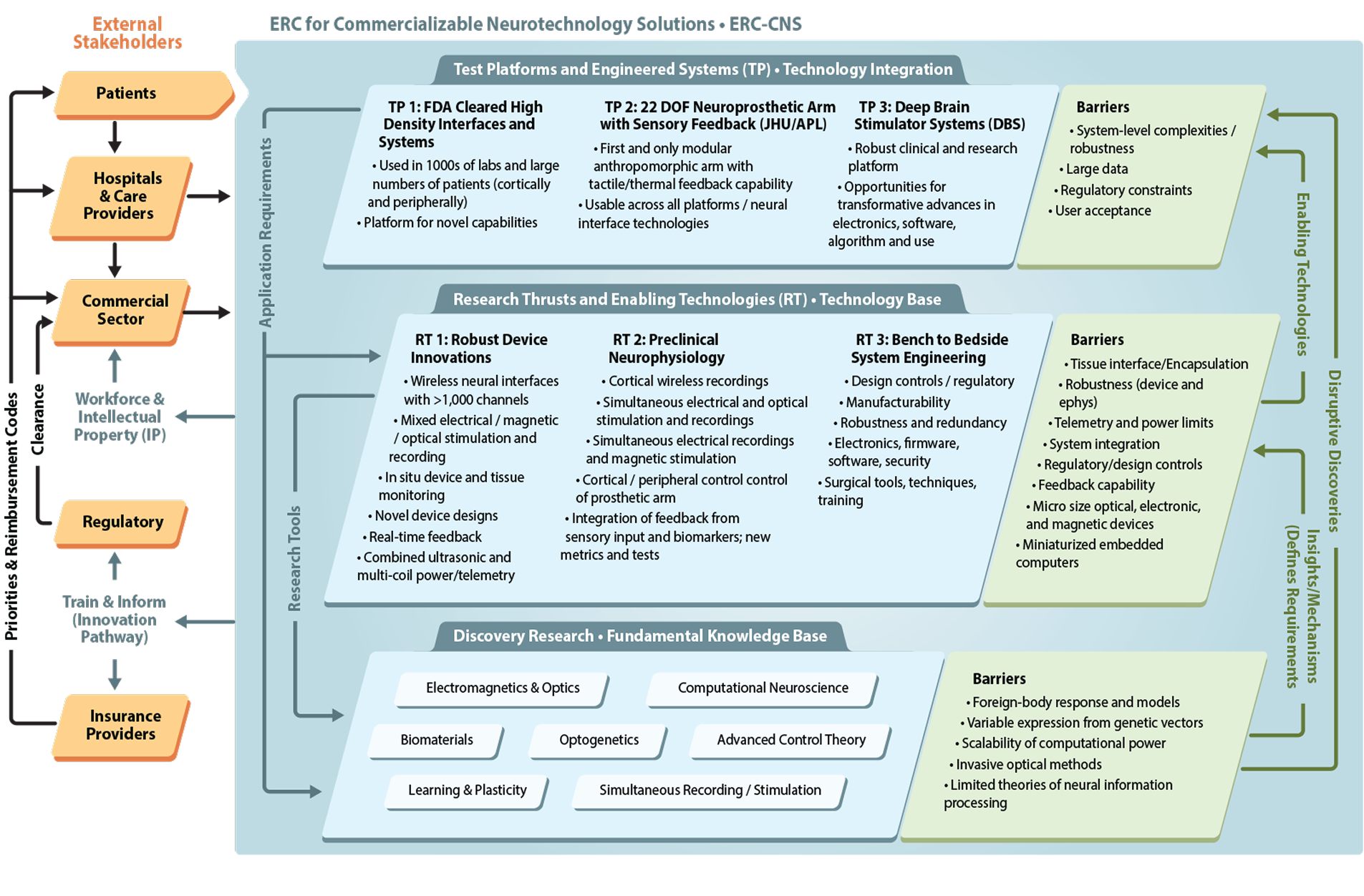
A single large-format diagram to organize a multi-institution research center spanning patients, hospitals, commercial partners, and regulators — alongside three tiers of technical work: Test Platforms, Research Thrusts, and Discovery Research. Every layer has its own set of barriers, technologies, and stakeholders. The piece is used in grant submissions, site visits, and orientation materials.